
How to Hack the Lowest Home Loan Interest Rates? Factors and Strategies
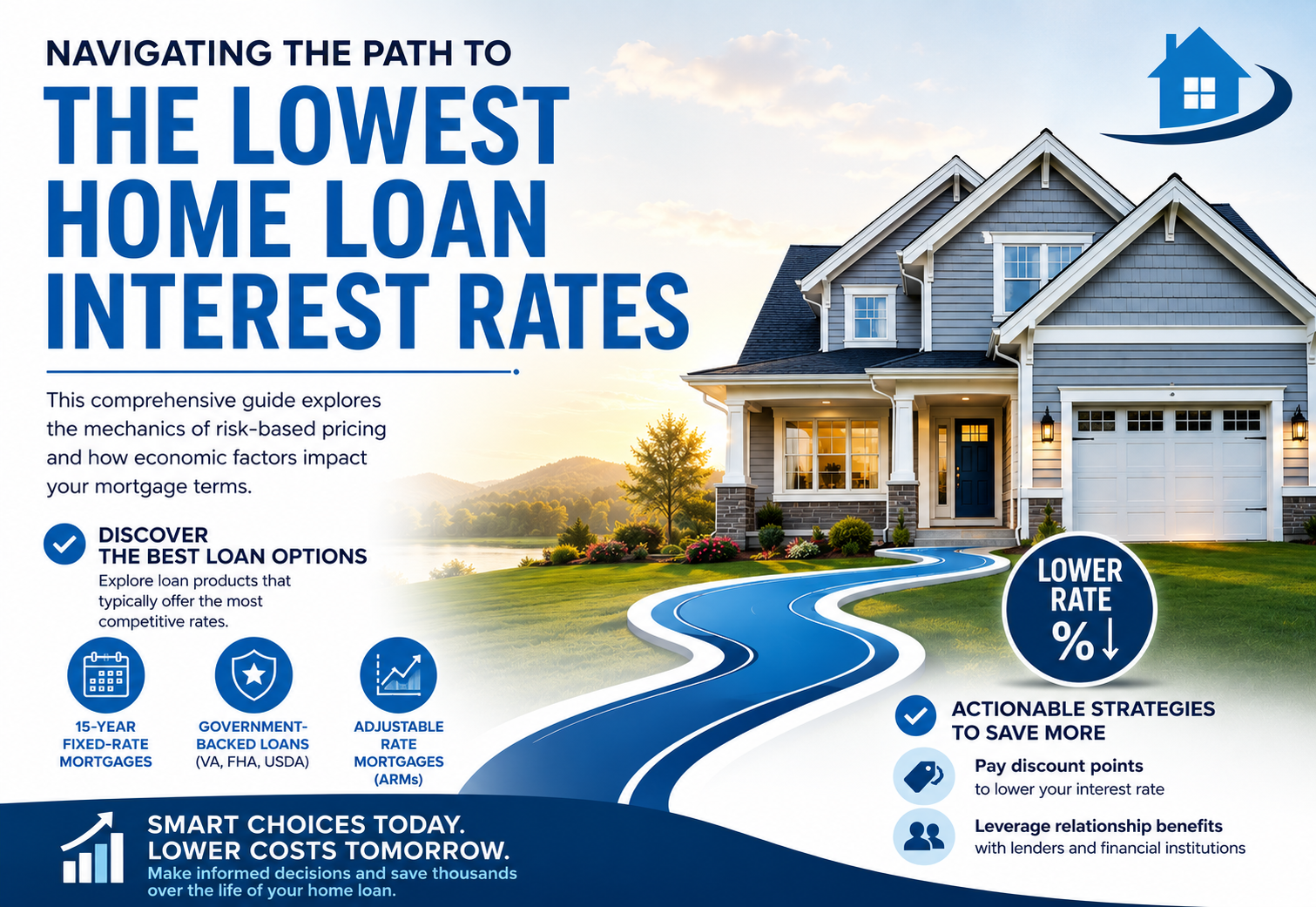
Understanding the landscape of home loan interest rates is essential for any prospective homebuyer or homeowner looking to refinance. Even small differences in interest rates can have a significant impact on a borrower’s financial future, potentially adding or subtracting tens of thousands of dollars in payments over the life of a 30-year loan. This guide provides an in-depth exploration of how the lowest interest rates are determined, the types of loans that typically offer them, and the strategies borrowers can use to secure the most favorable terms based on the provided sources.
The Foundation: How Interest Rates are Determined
Interest rates are not static; they are influenced by financial markets and many different economic indicators. Because these markets are constantly moving, mortgage rates can change daily or even multiple times within the same day.
Lenders use a process called “risk-based pricing” to determine the specific interest rate offered to a borrower. In this model, the interest rate acts as a price tag for the amount of risk the lender is assuming by lending the money. A lower interest rate indicates a lower perceived risk, while a higher rate compensates the lender for taking on more uncertainty.
Factors Impacting Your Individual Rate
Several key factors influence the “risk” a lender sees in a loan application. Understanding these can help you position yourself for the lowest available rates:
- Credit Profile: Lenders review your credit report and score to understand your debt and payment history. Generally, those with higher credit scores are eligible for lower rates.
- Loan-to-Value (LTV) Ratio: This is the amount you want to borrow compared to the appraised value of the property. A lower LTV ratio (achieved through a larger down payment) typically results in a lower interest rate because the borrower has more “skin in the game”.
- Debt-to-Income (DTI) Ratio: This measures your total monthly debt payments against your monthly income. A lower DTI suggests you have more financial breathing room to make mortgage payments, which can lead to better pricing.
- Property Type: The type of home being financed matters. Single-family detached homes are generally considered lower risk than investment properties, condominiums, or multi-family homes.
- Loan Purpose: Lenders often view purchase loans as lower risk than refinance loans. This is because buyers are seen as highly motivated to close and maintain their payments, whereas refinances (particularly cash-out) can sometimes result in the homeowner having less equity.
Loan Types with the Lowest Interest Rates
Not all loan products are created equal when it comes to interest rates. Depending on your eligibility and financial goals, certain structures consistently offer lower rates:
1. Short-Term Fixed-Rate Mortgages
Choosing a shorter loan term is one of the most effective ways to lower your interest rate. For example, a 15-year fixed-rate mortgage almost always offers a lower interest rate than a 30-year fixed-rate mortgage. While the monthly payments are higher because the loan is paid off faster, the total interest paid over the life of the loan is significantly lower.
2. Government-Backed Loans (FHA, VA, USDA)
Loans insured or guaranteed by the government often feature lower interest rates than conventional loans. The government guarantee reduces the lender’s risk if the borrower defaults.
- VA Loans: Reserved for veterans and service members, these often feature some of the lowest rates and typically do not require a down payment.
- FHA Loans: Popular for first-time buyers, these allow for lower credit scores and down payments as low as 3.5% while maintaining competitive rates.
- USDA Loans: Targeted at rural and suburban buyers, these offer 0% down payment options and lower rates for eligible properties.
3. Adjustable-Rate Mortgages (ARMs)
ARMs typically offer a lower initial interest rate at the start of the loan compared to fixed-rate options. These rates are usually fixed for a set period (such as 5, 7, or 10 years) before they begin to adjust based on market conditions. For borrowers who plan to sell or refinance before the initial period ends, an ARM can be the most cost-effective choice.
Strategies to Lower Your Interest Rate
If current market rates are not as low as you’d like, there are several active steps you can take to “buy down” or qualify for a better rate:
- Paying Discount Points: A discount point is an upfront fee paid at closing to “buy” a lower interest rate. This reduces the monthly payment over the entire life of the loan.
- Leveraging Relationship Benefits: Some lenders, such as Wells Fargo, offer interest rate discounts or closing cost credits based on the assets (savings, investments) you hold with the bank.
- Lowering the LTV Ratio: Putting more money down directly reduces the lender’s risk and can move you into a lower interest rate tier.
- Adding a Co-signer: Including a co-signer with a higher credit score or additional income can strengthen the loan application and potentially secure a lower rate.
- Improving Credit Health: Clearing errors on your credit report before applying can boost your score and help you qualify for better risk-based pricing.
Refinancing and Home Equity Considerations
When looking for the lowest rates for existing homeowners, the type of refinance matters. A “rate-and-term” refinance, which simply changes the interest rate or loan length, typically offers lower rates than a cash-out refinance. Cash-out refinances are viewed as higher risk because the borrower is taking on a larger loan balance to access their home equity.
Similarly, Home Equity Lines of Credit (HELOCs) and second mortgages usually have higher interest rates than primary mortgages. This is because they are “second” in line to be repaid if the borrower defaults, increasing the risk to the lender.
Conclusion
Securing the lowest home loan interest rate requires a combination of choosing the right product—such as a 15-year term or a government-backed loan—and optimizing your personal financial profile. By understanding that rates are a reflection of risk, you can take proactive steps like paying points, increasing your down payment, or leveraging existing banking relationships to ensure you are receiving the most competitive pricing available in the current market.