
Fast Approval vs Low Interest Rate: Which Mortgage Option Is Better?
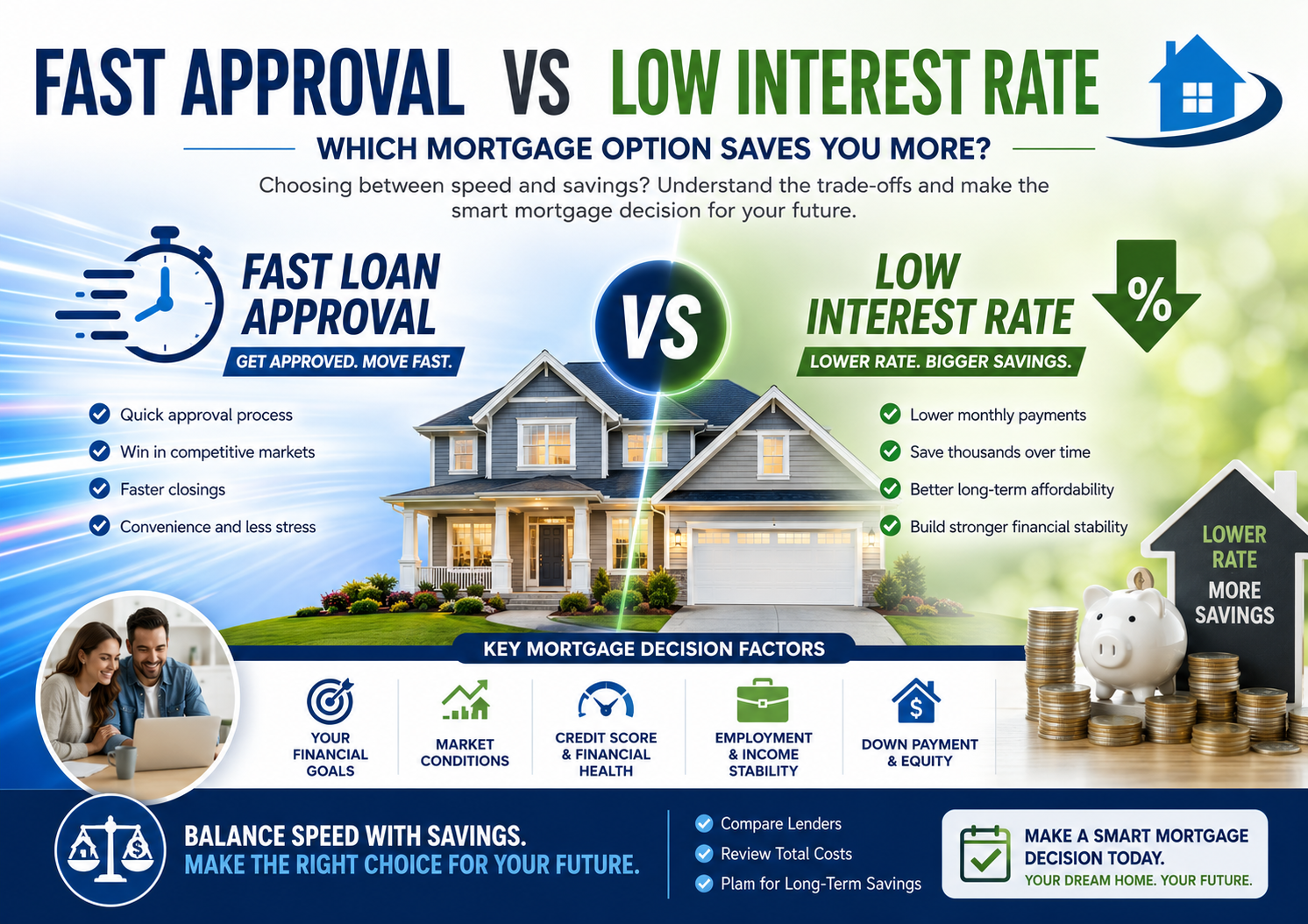
Buying a home is one of the biggest financial decisions most people ever make — and the mortgage you choose can shape your finances for decades. One of the most common dilemmas homebuyers face is a deceptively simple question: do you prioritize fast loan approval or a low interest rate? While both sound appealing, they rarely come together without trade-offs. Understanding how each option works — and what it costs you in the long run — can mean the difference between a smart investment and years of unnecessary financial strain.
What Does Fast Loan Approval Really Mean?
Fast loan approval refers to how quickly a lender can process your application, verify your information, and give you the green light to borrow. With the rise of online lenders and automated underwriting systems, some borrowers can receive conditional approval within 24 to 48 hours — sometimes even the same day.
This speed is made possible by streamlined digital processes that pull credit data, verify income electronically, and assess risk using algorithms rather than manual review. Pre-approval, which happens before you’ve chosen a property, is especially fast and gives you a concrete borrowing limit to shop with.
The benefits are real. In a competitive housing market, a fast approval can be your edge. Sellers favor buyers who can close quickly and cleanly. If you’re relocating for work, dealing with a lease ending, or eyeing a property with multiple offers, speed isn’t just convenient — it’s strategic.
However, fast approvals often come at a price. Lenders who prioritize quick turnarounds may charge higher interest rates to compensate for the reduced scrutiny. There may also be hidden origination fees or less room to negotiate terms. And if you’re rushing through the process, you may not have adequate time to compare competing offers — a costly oversight over a 15- or 30-year loan.
Why Interest Rates Matter More Than Most People Realize
Even a seemingly small difference in interest rate can add up to tens of thousands of dollars over the life of a mortgage. Consider a $300,000 home loan over 30 years: at 6.5% interest, you’d pay roughly $382,000 in total interest. At 7.5%, that figure jumps to approximately $454,000. That’s a difference of over $70,000 — simply because of a one-percentage-point gap in the rate.
Low-interest mortgages typically require more patience and paperwork. Lenders offering the most competitive rates want to be confident in your ability to repay. That means thorough income verification, a strong credit score (usually 740 or above), a low debt-to-income ratio, and often a larger down payment. The approval process may take two to four weeks rather than two to four days.
The trade-off is worth it for many buyers. Lower monthly payments mean more breathing room in your budget, and a reduced total borrowing cost gives you greater long-term financial stability. For buyers who plan to stay in their home for many years, a lower rate is almost always the better economic choice.
Fast Loan vs Low Interest: Key Differences at a Glance
The core tension between these two options comes down to short-term convenience versus long-term savings.
Fast approval serves your immediate needs — it gets you into a property quickly and reduces the stress of a drawn-out process. But it can cost you in the form of higher rates, higher fees, or less favorable loan terms. Low-interest mortgages protect your financial future, but they demand more from you upfront in terms of time, documentation, and financial discipline.
Here’s how they compare across a few key dimensions:
Approval speed: Fast-approval lenders may close in 2–3 weeks or less. Traditional lenders with competitive rates often take 30–45 days.
Credit requirements: Both types of loans consider your credit score, but low-rate mortgages are stricter. A score below 700 may disqualify you from the best rates.
Documentation: Speed-focused lenders may accept simpler verification. Low-rate lenders typically require full tax returns, pay stubs, bank statements, and employment history.
Total cost: Fast loans may have higher APRs and fees. Low-interest loans save more over time despite slower processing.
Which Option Is Right for You?
The answer depends on your specific circumstances, financial goals, and the current market environment.
Choose fast approval if: You’re in a competitive real estate market where properties go under contract within days. You’re facing a time-sensitive situation such as a job relocation. Your finances are already in excellent shape, and the rate difference between fast and standard lenders is minimal. You plan to refinance within a few years if rates drop.
Prioritize a low interest rate if: You plan to stay in your home for 10 years or more. You’re focused on minimizing your total borrowing cost. The market isn’t forcing you to act urgently. You’re refinancing an existing mortgage and want to reduce long-term payments.
For most long-term homeowners, the math favors the lower rate. However, if a faster approval helps you win a bidding war and secure a property that would otherwise go to another buyer, it may be the smarter move — particularly if you can refinance to a lower rate down the line.
How to Get the Best of Both Worlds
Here’s the good news: fast approval and competitive interest rates aren’t always mutually exclusive. With the right preparation, you can improve your chances of qualifying for both.
Improve your credit score before applying. Pay down revolving balances, avoid new credit inquiries, and resolve any errors on your report. A score above 740 opens doors to the best rates — and lenders trust you enough to move quickly.
Get pre-approved early. Pre-approval before you start house hunting puts you ahead of the curve. It signals to sellers that you’re serious and lets lenders start most of the verification work in advance, cutting down closing time significantly.
Compare multiple lenders. Don’t stop at the first offer. Get quotes from at least three to five lenders — including banks, credit unions, and online mortgage companies. Even a 0.25% rate difference can save thousands.
Prepare your documents in advance. Gather your last two years of tax returns, recent pay stubs, bank statements, and proof of assets before you apply. Having everything ready eliminates back-and-forth delays without sacrificing rate quality.
Work with an experienced mortgage broker. Brokers have access to multiple lenders and understand which ones offer the fastest timelines alongside competitive rates. Their expertise can help you avoid common pitfalls and find the right fit faster.
Common Mistakes to Avoid
Many homebuyers make the mistake of focusing only on the monthly payment rather than the total cost of the loan. A slightly higher rate may feel manageable month to month but add significantly to your financial burden over 30 years. Equally problematic is ignoring the APR — the annual percentage rate includes fees and gives you a more complete picture of what you’re actually paying.
Rushing to accept the first fast approval without shopping around is one of the most expensive mistakes buyers make. Similarly, assuming that a low advertised rate applies to your specific situation can lead to disappointment. Rates vary based on credit score, loan type, property location, and down payment.
The Bottom Line
The fast loan vs low interest debate doesn’t have a single right answer — it has the right answer for you. Both speed and affordability matter; the question is which matters more given your timeline, financial health, and long-term plans.
If urgency is driving your decision, prioritize fast approval — but go in with clear eyes about the cost. If you have time and flexibility, do the work to secure the lowest rate possible. And whenever you can, prepare in advance so you don’t have to choose between the two.
Speak with a mortgage expert today to find the right balance between fast approval and affordable rates — and make your home purchase work for your future, not just your timeline.