
10 Lead Generation Strategies That Actually Work for Mortgage Loan Officers
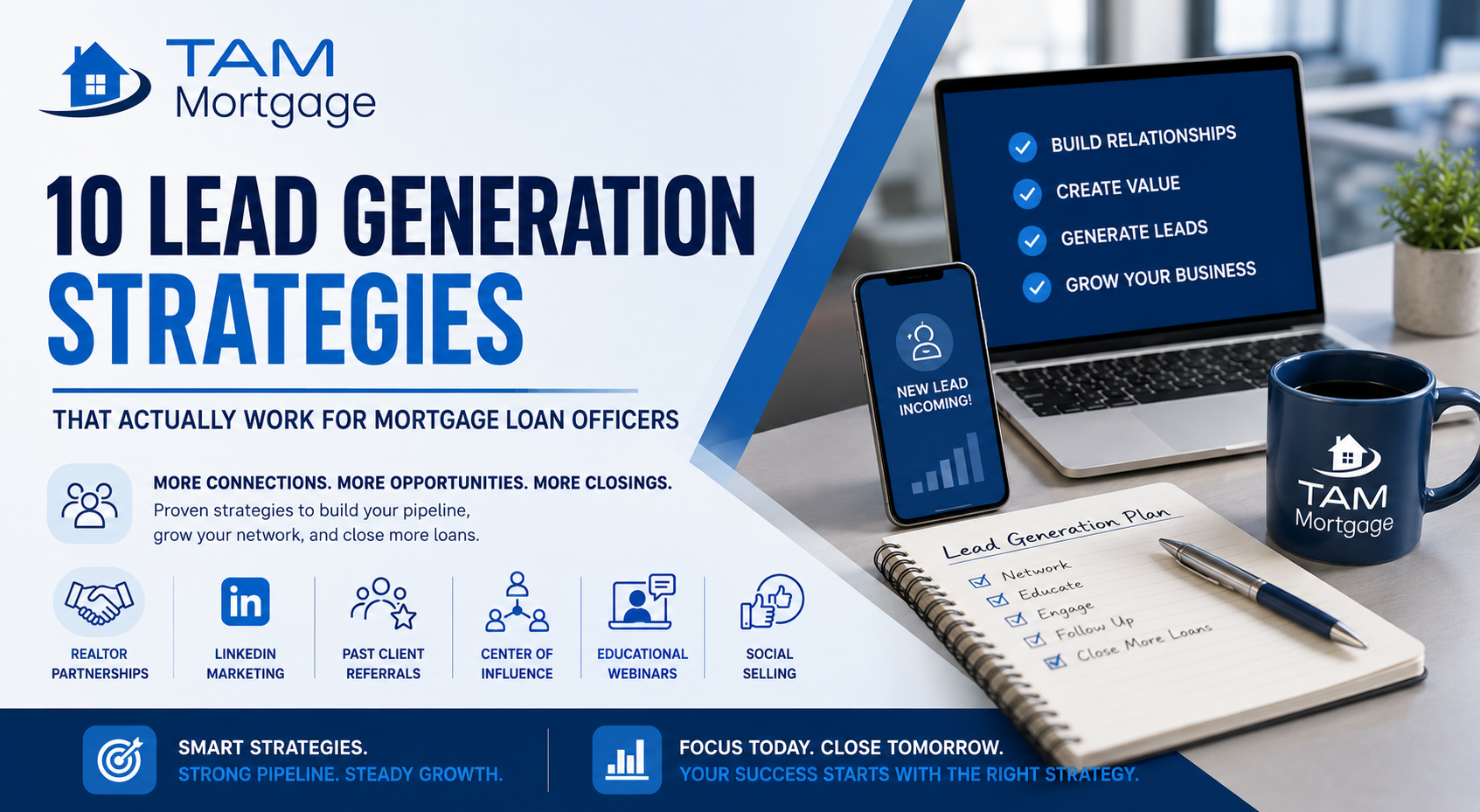
Your book of business doesn’t grow by accident. It grows through intentional, consistent prospecting. Whether you’re a seasoned loan officer or building your first pipeline, understanding what actually works—versus what wastes your time—is the difference between hitting quota and missing it. Here are ten proven lead generation strategies that mortgage professionals use to build sustainable, profitable pipelines.
1. Build a Strategic Realtor Referral Network
Real estate agents are the most consistent source of mortgage referrals. Agents need reliable loan officers they can trust to close on time and communicate with buyers. To build this relationship:
- Identify 10-15 top-producing agents in your target market
- Schedule quarterly coffee meetings to discuss market conditions and their lending needs
- Provide agents with a simple one-page guide on your loan programs and qualifying criteria
- Stay in touch with monthly market updates or industry insights
- Offer fast pre-approvals and clear communication—agents value responsiveness
One loan officer increased his referral volume by 40% simply by meeting with five key agents monthly and ensuring 48-hour pre-approval turnarounds. Consistency beats complexity.
2. Master Your LinkedIn Profile and Content Strategy
LinkedIn is where mortgage professionals network, and it’s a goldmine for lead generation if you use it correctly.
Optimize your profile. Use industry keywords in your headline (not just “Loan Officer”), add a professional photo, and write a compelling summary that speaks to your target borrower and referral partners.
Post regularly. Share insights on market trends, mortgage tips for real estate agents, or stories of borrowers you’ve helped. Aim for one post per week. Content that educates and builds trust performs best.
Engage authentically. Comment on others’ posts, congratulate connections on new roles, and participate in mortgage industry conversations. LinkedIn rewards engagement with visibility.
Use LinkedIn’s direct messaging. Send personalized connection requests explaining why you’d like to connect. A simple “I noticed you’re a top real estate agent in [city]—I’d love to explore partnership opportunities” opens doors.
LinkedIn marketing for mortgage professionals
3. Activate Your Past Client Referral Pipeline
Your past clients are your easiest lead source. They’ve already experienced your service and trust you.
- Develop a simple referral program: “Refer a friend who closes a loan and receive a $100 gift card or donation in your name”
- Schedule quarterly “check-ins” via email or phone with past clients
- Send market updates or refinance alerts when rates drop (“Your current loan might be refinance-eligible”)
- Create a referral card or flyer borrowers can share
- Make it easy: provide a link or phone number for referrals to contact you directly
Past clients who’ve had a positive experience are five times more likely to refer than any cold prospect. Don’t leave this source untapped.
4. Develop Strategic Center of Influence Partnerships
Centers of influence (COIs) are professionals who encounter homebuyers regularly: mortgage brokers, financial advisors, CPAs, real estate attorneys, and home inspectors.
- Identify COIs in your market and schedule introductory meetings
- Explain your value proposition: “I specialize in [jumbo loans, investment properties, self-employed borrowers], and I’d love to be a resource for your clients”
- Provide COIs with referral materials and your direct contact
- Follow up with updates and referrals when you encounter their ideal clients
- Offer reciprocal referrals when appropriate
A CPA referring 3-5 clients annually to you can be as valuable as a dozen realtor relationships.
5. Host Educational Webinars for Real Estate Agents
Become the go-to education resource for real estate professionals in your market.
- Host quarterly webinars on topics like “New Loan Programs,” “Qualifying Self-Employed Borrowers,” or “Market Trends and Rate Predictions”
- Keep webinars short (30-45 minutes) and practical
- Record and share videos on LinkedIn and your website
- Include a simple CTA: “Questions? Reach out directly”
Real estate agents will share these with their teams and recognize you as a thought leader. This positions you as the expert they want to refer to.
6. Leverage Social Selling on Facebook and Instagram
Social selling isn’t about hard pitches—it’s about building relationships and credibility.
- Share valuable mortgage tips: “3 Ways to Improve Your Credit Score Before Applying for a Mortgage”
- Post before-and-after borrower stories (anonymously): “We helped a self-employed entrepreneur get qualified for his dream home”
- Go live monthly to answer real estate and mortgage questions
- Engage in real estate and homeowner Facebook groups (without being overly promotional)
- Use stories and reels to keep your brand visible
Consistent, helpful social presence builds familiarity and trust. When someone needs a loan officer, you’ll come to mind.
7. Create and Distribute a Monthly Market Report
Position yourself as the market expert by producing a simple monthly newsletter or report.
- Include interest rate trends, local market data, and lending insights
- Mention new loan programs or policy changes
- Keep it short and visual (one page or 2-3 minute read)
- Email it to your database: past clients, agents, COIs, and prospects
- Link to your website for lead capture
A monthly touchpoint keeps you top-of-mind and gives people a reason to open your emails.
8. Attend Real Estate Networking Events and Board Meetings
In-person networking remains highly effective, especially in real estate.
- Join your local Real Estate Board or attend monthly agent association meetings
- Sponsor or exhibit at real estate conferences
- Attend mortgage industry events (NAMB, MBA meetings, mortgage expos)
- Bring business cards and be genuinely interested in people, not just collecting contacts
- Follow up within 48 hours with a personal message
One-on-one conversations build relationships that digital alone cannot.
9. Implement a Google Local Services Ad Campaign
Google Local Services Ads appear at the top of search results and are ideal for reaching borrowers actively searching for loan officers.
- Set a monthly budget and use Google’s lead management tools
- Respond to inquiries within hours (speed matters)
- Ask for reviews from every closed loan
- Monitor performance and adjust your messaging based on what resonates
This is paid lead generation, but it targets high-intent borrowers actively seeking your service.
10. Build a Podcast or YouTube Channel
Long-form content builds authority and attracts a consistent audience.
- Start a weekly podcast interviewing local real estate agents, investors, or other professionals
- Or create a YouTube channel with mortgage education: “First-Time Buyer’s Guide,” “Investment Property Loans,” etc.
- Repurpose content across LinkedIn, Instagram, and your website
- Add a simple CTA in each episode: “Questions? Book a consultation”
This is a longer-term play, but it positions you as the thought leader in your market.
Common Lead Generation Mistakes to Avoid
- Inconsistency. Sporadic prospecting efforts yield sporadic results. Commit to a schedule.
- No follow-up. A single touch rarely converts. Plan for 5-7 touches over weeks before expecting results.
- Generic messaging. Personalize your outreach. “I noticed you specialize in luxury homes and would love to discuss jumbo loan options” beats “Let’s do business.”
- Ignoring analytics. Track which channels produce the best leads. Double down on what works, cut what doesn’t.
- Mixing tactics too thin. Master three strategies well instead of doing ten poorly.
Conclusion: Your Lead Generation Plan
The most successful loan officers don’t rely on one lead source. They build a diversified pipeline using realtor partnerships, past client referrals, LinkedIn, COI relationships, and social selling. Start with two or three strategies that fit your personality and market, execute consistently, and add more as you scale.
Lead generation is a discipline, not a hobby. Commit to it, and your book of business will grow.
Ready to accelerate your loan officer growth? Pick one strategy from this list and commit to executing it for the next 30 days. Track results. Adjust. Then add another.