
Mortgage Pre-Approval vs Pre-Qualification: Difference and Which Do You Need?
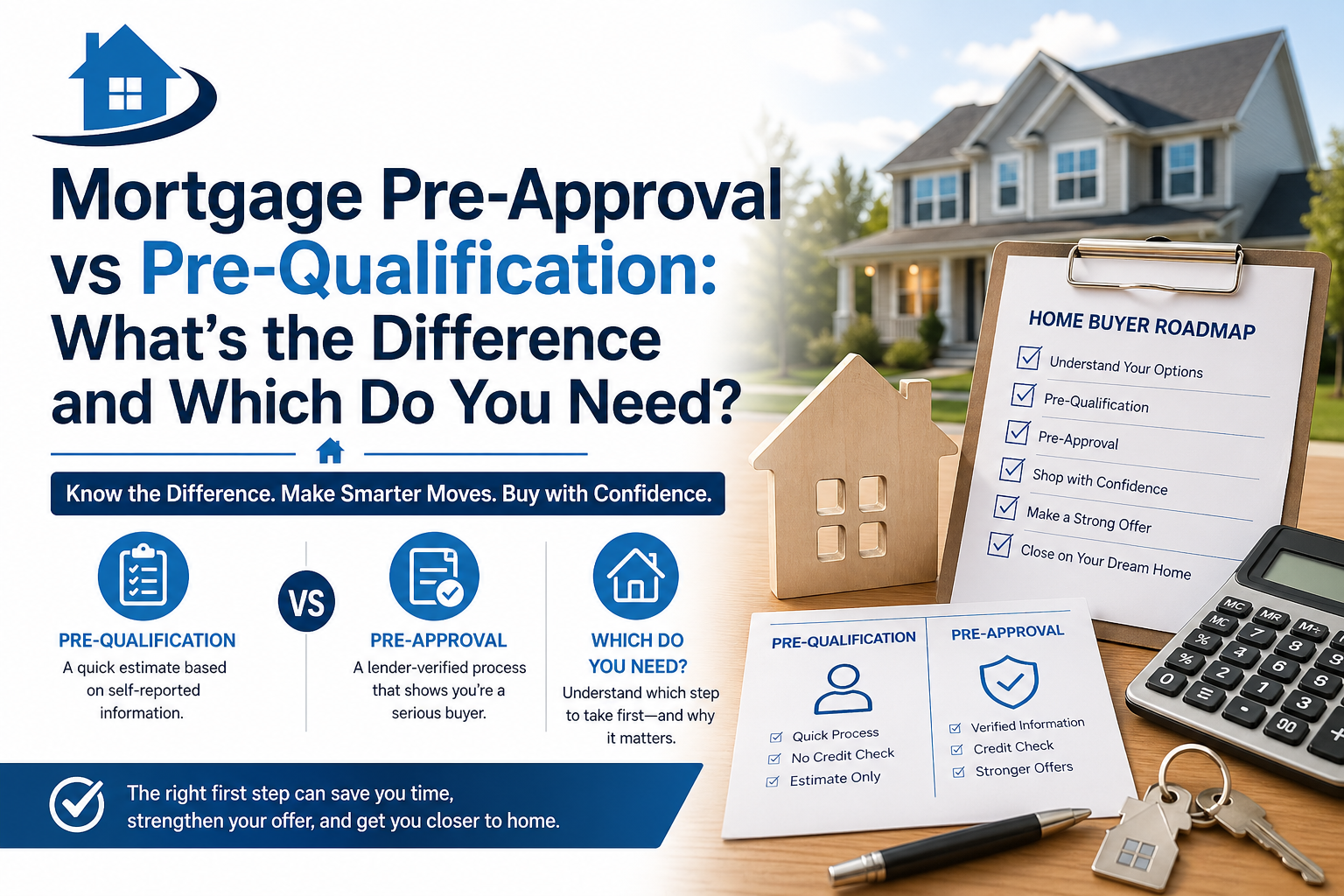
If you’re getting ready to buy a home, you’ve probably heard the terms “pre-qualification” and “pre-approval” tossed around — sometimes interchangeably. But they’re not the same thing, and mixing them up can cost you time, opportunity, and credibility with sellers. Understanding the difference between pre-qualification vs approval is one of the smartest early moves you can make in the home buying journey. Here’s everything you need to know.
What Is Mortgage Pre-Qualification?
Pre-qualification is the first, lighter-touch step in the home loan approval process. It gives you a general estimate of how much you might be able to borrow — based largely on information you provide to the lender, with no formal verification involved.
During pre-qualification, a lender typically asks about:
- Your estimated annual income
- Your current debts and monthly obligations
- Your approximate credit score range
- Your down payment savings
No hard credit inquiry is required at this stage, and no documents are submitted. The lender takes your word for it and gives you a ballpark borrowing range in return.
What Pre-Qualification Is Good For
Pre-qualification is best used as an early planning tool. It helps you:
- Get a rough sense of your budget before you start browsing listings
- Identify any obvious financial gaps to address before applying
- Have an initial conversation with a lender about your options
However, it carries little weight with sellers. In a competitive real estate market, a pre-qualification letter alone is unlikely to make your offer stand out. [INTERNAL LINK: How to Make a Strong Offer in a Competitive Market]
What Is Mortgage Pre-Approval?
Mortgage pre-approval is a far more rigorous — and far more valuable — step in the home loan approval process. Unlike pre-qualification, pre-approval involves a thorough review of your actual financial documents and a hard credit inquiry.
To issue a pre-approval letter, a lender will typically request:
- W-2s and/or tax returns (usually 2 years)
- Recent pay stubs (last 30 days)
- Bank and asset account statements
- Employment verification
- A full credit report pull
Based on this verified information, the lender confirms — not just estimates — the loan amount you qualify for, the loan types available to you, and an indicative interest rate range.
Why Mortgage Pre-Approval Is Worth the Extra Step
A mortgage pre-approval letter tells sellers and their agents that a lender has already done the homework. You’re not a maybe — you’re a verified, ready-to-move buyer. That distinction can be the difference between winning and losing your dream home, especially in a fast-moving market.
Pre-approval also gives you:
- A firm budget — so you shop with real numbers, not guesses
- Faster closing timelines — much of the financial review is already done
- Greater negotiating confidence — sellers are more likely to take your offer seriously
- Early issue detection — any credit or income red flags surface now, giving you time to address them before you’re under contract
Pre-Qualification vs Approval: A Side-by-Side Comparison
Feature | Pre-Qualification | Pre-Approval |
Information Required | Self-reported estimates | Verified documents |
Credit Check | Soft inquiry (or none) | Hard inquiry |
Accuracy | Estimate only | Based on verified financials |
Time to Complete | Minutes to hours | 1–3 business days |
Seller Credibility | Low | High |
Best Used For | Early budget planning | Active home shopping |
Where Does Each Fit in the Home Loan Approval Process?
Here’s how both steps fit into the broader home loan approval process:
- Pre-Qualification — Explore your general borrowing range and set expectations
- Pre-Approval — Submit documents, get verified, and receive your pre-approval letter
- Home Search — Shop with confidence within your confirmed budget
- Offer & Acceptance — Submit your offer backed by your pre-approval letter
- Full Underwriting — Lender conducts a deep review of your finances, the property, and the appraisal
- Clear to Close — Final approval is issued and closing is scheduled
- Closing Day — You sign, fund, and get the keys
Pre-approval takes you through step two — which means by the time you’re making offers, the most time-consuming financial review is already behind you. [INTERNAL LINK: What to Expect During the Mortgage Underwriting Process]
Does Pre-Approval Guarantee Final Loan Approval?
This is one of the most common questions in the pre-qualification vs approval conversation — and the honest answer is: not automatically.
Pre-approval is a strong, conditional commitment from the lender based on your finances at the time of application. Final approval can still be affected by:
- Changes in your income or employment status
- New debts taken on after pre-approval (avoid large purchases or new credit lines)
- Issues discovered during the property appraisal
- Significant changes in interest rates or loan program guidelines
How Long Does Mortgage Pre-Approval Last?
Most mortgage pre-approval letters are valid for 60 to 90 days. If you haven’t found a home within that window, you’ll typically need to reapply — which means updated documents and a new credit pull. If your financial situation hasn’t changed significantly, the process is usually quick the second time around.
When Should You Get Pre-Approved?
Ideally, before you start seriously touring homes. Here’s why: falling in love with a property before knowing your real budget — or discovering your finances need work — puts you at a disadvantage right from the start.
A good rule of thumb: get your mortgage pre-approval in hand at least 2–4 weeks before you plan to make your first offer. That gives you time to address any surprises that come up during the review.
Ready to Start the Home Loan Approval Process?
Whether you’re just starting to explore your options or you’re ready to make an offer next month, knowing where you stand financially is step one. Our team makes the pre-approval process simple, fast, and stress-free — so you can shop for your home with real confidence.
Get your mortgage pre-approval started today — no pressure, no obligation.
FAQs
Pre-qualification is an initial estimate of how much you may be able to borrow based on self-reported financial information, while pre-approval is a more detailed review that includes credit checks, income verification, and supporting documents. A pre-approval letter generally carries more weight with sellers.
Pre-approval is typically better if you are actively shopping for a home because it shows sellers that a lender has already reviewed your financial information. Pre-qualification is useful earlier in the process when you are still estimating your budget and exploring loan options.
Yes, mortgage pre-approval usually involves a hard credit inquiry, which may cause a small temporary impact on your credit score. Pre-qualification may only involve a soft credit check or no credit pull at all, depending on the lender.
Lenders generally ask for recent pay stubs, W-2s, tax returns, bank statements, employment information, and permission to review your credit history. These documents help determine how much home financing you qualify for.
Most mortgage pre-approvals remain valid for about 60 to 90 days, although this can vary by lender. If your financial situation changes or the approval expires, you may need to update your documents and reapply.